1. Open the Page in Visual Composer
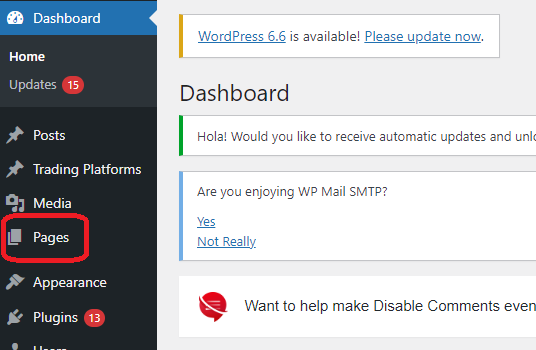
From the WordPress Dashboard, go to Pages in the left sidebar.
2. Find the Content You Want to Edit
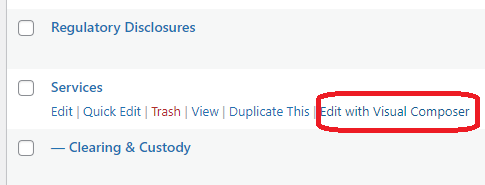
Once the Visual Composer editor opens, navigate to the content you want to update.
Visual Composer pages are built using structural elements such as sections, rows, and columns, along with content elements such as text blocks, images, and buttons.
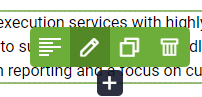
Hover over the element you want to change to display its editing controls.
3. Edit the Content
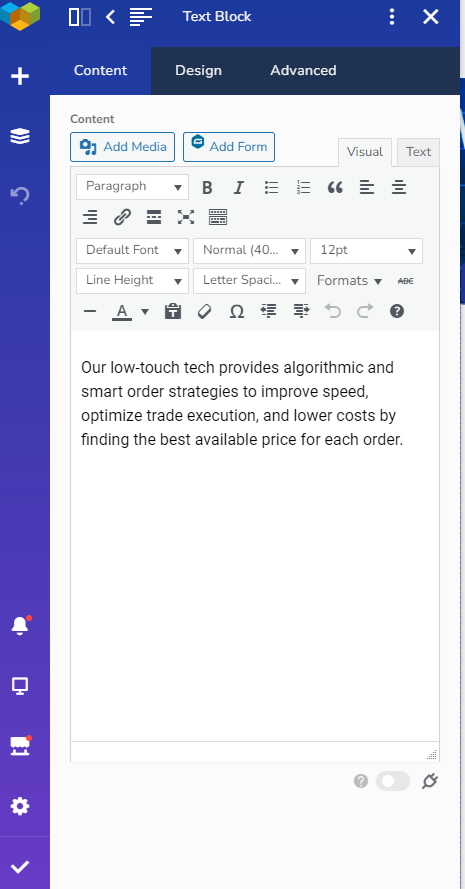
Select Edit from the element controls to open the element settings. You can also double-click an element to edit it.
For text-based elements, Visual Composer may allow you to edit the text directly using the inline editor.
Make the necessary changes to the content and review any available design or element settings before closing the editing window.
Note: Be careful when changing rows, columns, or other structural elements, as these changes can affect the overall page layout.
4. Add or Rearrange Content
To add new content, use Add Content and select the element you want to add.
Available elements may include:
- Text blocks
- Images
- Buttons
- Rows and columns
- Templates and blocks
- Other custom or website-specific elements
You can also drag and drop supported elements to rearrange content on the page.
5. Check the Page on Different Devices
Use Visual Composer's Responsive View to preview the page on different device sizes.
Review your changes on desktop, tablet, and mobile to make sure the content and layout display correctly.
6. Save Your Changes
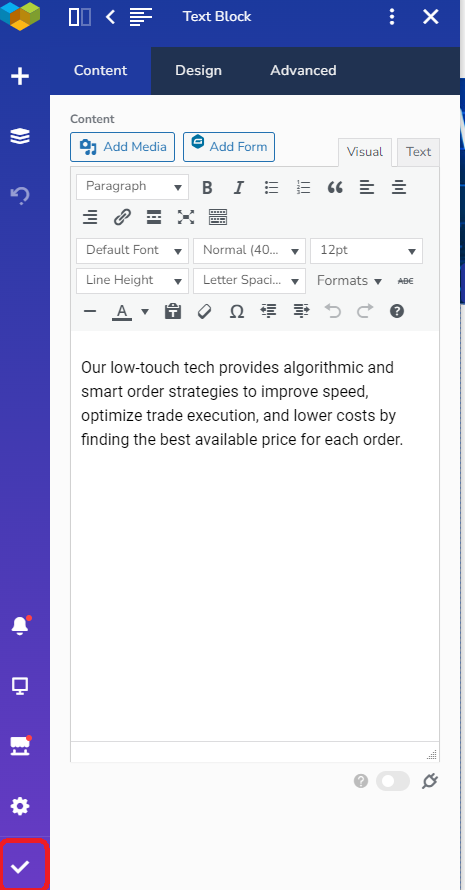
When you're finished editing, use the checkmark/save control in the Visual Composer navigation bar to save or publish your changes.
After saving, view the page on the frontend of the website to confirm everything appears correctly.
7. Clear the Website Cache if Needed
If your changes have been saved but do not appear immediately on the live website, the site may be displaying a cached version of the page.
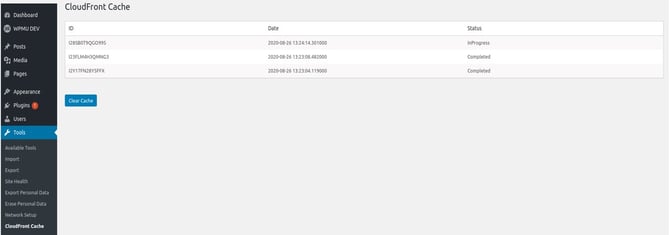
Depending on your website configuration, you may need to clear the cache through a WordPress caching plugin, your hosting provider, CloudFront/CDN, or another caching service.
If your Gate 39-managed website uses CloudFront Cache, go to Tools → CloudFront Cache from the WordPress Dashboard and clear the cache.