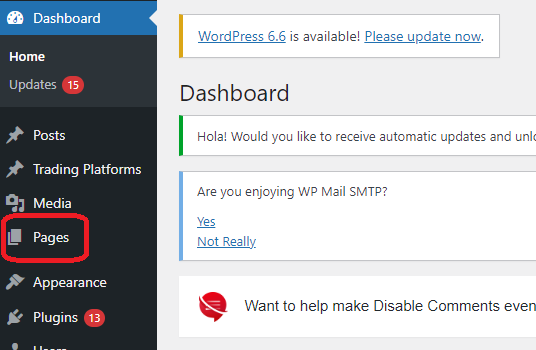
Log in to your WordPress dashboard and navigate to Pages → All Pages.
Find the page you want to update. Open the page to access the WPBakery editor. Depending on your website configuration, you may also see an Edit with WPBakery Page Builder option.

WPBakery provides two primary ways to edit content:
Backend Editor
The Backend Editor lets you manage the page structure from the WordPress admin area. Content is organized into rows, columns, and individual elements.
Frontend Editor
If enabled on your website, the Frontend Editor allows you to view the page while making changes to its content and layout.
The available options may vary depending on your WordPress user permissions and the website's configuration.
Locate the content element you want to modify.
WPBakery pages may contain different types of elements, such as:
- Text Blocks
- Images
- Buttons
- Headings
- Rows and columns
- Custom website-specific elements
Select the Edit option or pencil icon for the element you want to change.
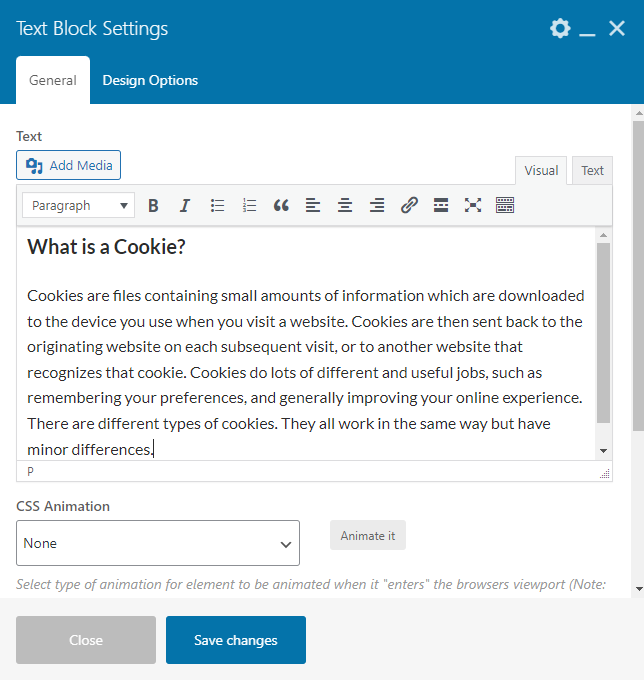
Make your changes in the element's settings, then click Save Changes.
If you need to add new content, select Add Element and choose the appropriate content element.
You can also drag and drop supported elements, rows, and columns to rearrange the page layout.
The available elements may vary depending on the website's theme, plugins, and custom configuration.
After making your changes, click Update to save changes to an existing page or Publish if you are creating a new page.
Once the page has been updated, view it on the frontend and confirm that the content and layout appear correctly.
6. Clear the Website Cache if Needed
Some WordPress websites use caching to improve performance. If your changes are saved but do not appear on the live website immediately, the site's cache may need to be cleared.
The caching method varies by website and may be managed through a WordPress plugin, hosting provider, CDN, or another caching service.
If you are unsure whether your website uses caching or how to clear it, contact your website administrator before changing any cache settings.